


From recovery and understanding to qualifications, opportunity and change.
Welcome to BeyondTrauma Academy CIC, a survivor-led trauma education and recovery academy, creating pathways from understanding trauma and building recovery skills through to continued learning, peer connection, accredited qualifications and professional progression.
Through psychoeducation, structured programmes and lived-experience-led learning, we equip people with knowledge, practical tools and opportunities to move forward — while working with professionals and systems to improve trauma-informed practice.
More than support — a pathway for learning, recovery, connection and progression.
Our Academy model recognises that people need different things at different stages. From understanding trauma and developing recovery skills to continued learning, peer connection and accredited qualifications, our pathways are designed to help people move forward in ways that are meaningful to them.
Understand trauma and develop practical recovery skills through psychoeducation, self-study and structured programmes — without needing to disclose or revisit traumatic experiences.
Learning doesn't end when a programme finishes. Continue through educational resources, self-help tools, the Survivor Forum and co-designed peer-support groups.
Take your learning further — if you choose — through Survivors in Business, accredited training, the Level 4 BeyondTrauma™ Facilitator Diploma, professional development, employment or enterprise.
We take the BeyondTrauma™ approach beyond individual learning — working within communities, custodial settings and professional systems to strengthen trauma-informed practice and create lasting change.
We bring trauma education, recovery and lived-experience-led co-design into custodial and community settings, supporting women while helping shape more trauma-informed approaches across the criminal justice system.
We work with community organisations, education providers and other partners to bring accessible trauma education and recovery programmes directly into the settings where people already access support.
We turn lived experience into professional learning, training and co-design — working across criminal justice, healthcare, social care and education to strengthen how organisations understand and respond to trauma.
BeyondTrauma™ is not therapy and it isn’t traditional survivor support. Our approach is built around education — helping people understand trauma, develop practical skills, recognise their learning and create pathways forward.

Our psychoeducational approach teaches people what trauma does, why certain responses happen and how to develop practical recovery skills — without requiring them to disclose or repeatedly revisit what happened.

Recovery doesn't end with one intervention. Learning can continue through self-study, resources, peer spaces and further programmes, allowing people to build knowledge at their own pace.

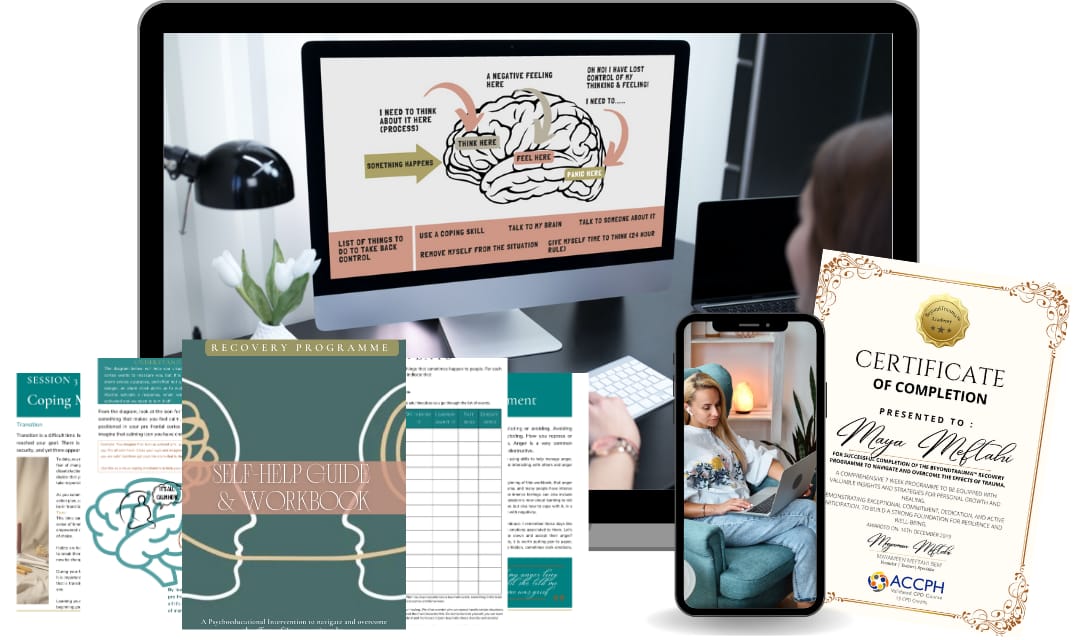
Learning and progress matter. Our pathways include certificates of completion and can extend into accredited qualifications — recognising not only what people have survived, but what they have learned and achieved.

Our approach was built from lived experience and continues to be shaped through survivor voice and co-design. That knowledge also informs the training, professional learning and systems-change work we deliver.

BeyondTrauma Academy CIC has been recognised for its survivor-led approach to trauma recovery, education and creating pathways beyond trauma.
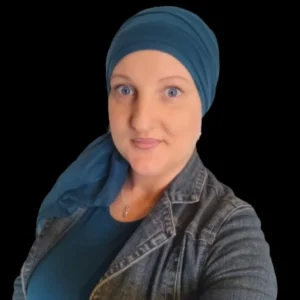
Founded by Mayameen Meftahi BEM, whose work in trauma recovery and survivor-led change spans more than a decade, the Academy brings lived experience together with structured psychoeducation, professional learning and systems change.
Now, Beyond Trauma Academy CIC stands as a testament to her mission: empowering others to rise beyond trauma. We are proud to have been Awarded by Global Health Pharma for:

Global Health & Pharma

Global Health & Pharma

Awarded the British Empire Medal for services to victims of trauma
We measure impact beyond attendance. Our programmes are designed to increase understanding, build practical recovery skills and give people greater confidence to move forward. For some, that journey continues into peer connection, further learning, qualifications and new opportunities.
From understanding trauma for the first time to achieving a recognised qualification, impact at BeyondTrauma is about what becomes possible next.
What we learn through survivor-led practice doesn’t stay within our programmes.
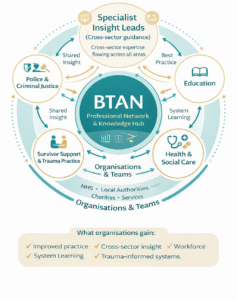
Through the BeyondTrauma Advisory Network (BTAN), professional learning, co-design and consultancy, we bring lived experience and trauma-informed knowledge into the organisations and systems that support people.
Our cross-sector work connects criminal justice, health and social care, education, community organisations and trauma-informed practitioners — creating opportunities to share learning, strengthen practice and improve responses to trauma.
This creates a continuous learning cycle: survivor experience informs practice, professional insight strengthens services, and learning is brought back into the Academy.
BeyondTrauma Academy CIC was founded by Mayameen Meftahi BEM from Mayameen’s lived experience of surviving child sexual abuse. Her journey from trauma to healing, shaped a different approach to trauma recovery — one built around education, understanding and opportunity.
Before publicly sharing her story, Mayameen had already begun influencing change behind the scenes. She delivered a TEDx talk and lectured at The Queen’s Nursing Institute, advocating for greater understanding of trauma while maintaining her anonymity.
In 2018, Mayameen made the courageous decision to waive her anonymity following her father’s early release from prison. Her experience strengthened her determination not only to speak about what survivors face, but to help change what happens after trauma.
Her experience strengthened her determination not only to speak about what survivors face, but to help change what happens after trauma.
Her work has since included:
🏛 Successfully campaigned for the UK’s first-ever child refuge for victims of sexual abuse, with the motion passed in Wales
📺 Featured in a Channel 5 documentary raising awareness of child sexual abuse
🎖 Awarded the British Empire Medal for services to victims of trauma
Mayameen wanted to create somewhere people could understand trauma, learn practical recovery skills, have their learning recognised, remain connected, and — where they choose — progress into qualifications, professional development and opportunities of their own.
That philosophy now sits at the heart of the BeyondTrauma™ model: turning lived experience into knowledge, knowledge into learning, and learning into possibility.
PROFESSIONAL TRAINING
ACCPH Accredited • 6 CPD Points
A practical and engaging exploration of trauma, its impact on the brain, body and behaviour, and how professionals can create safer, more effective and compassionate environments for people affected by adversity and trauma.
Delivered by Mayameen Meftahi BEM, Founder and Lead Trauma Specialist at BeyondTrauma Academy CIC and creator of the award-winning BeyondTrauma™ Recovery Programme, this training brings together professional knowledge, lived experience and survivor-informed insight to provide a deeper understanding of trauma and recovery.
Combining lived experience with professional practice, Mayameen offers insight into the realities of trauma, the responses that can sit beneath behaviour and the practical approaches that can support people more effectively.
This training moves beyond theory, helping professionals understand the real-life impact of trauma and how to embed trauma-informed principles into everyday practice.
Understanding Trauma
Develop a clearer understanding of trauma, adversity and the ways traumatic experiences can continue to influence thoughts, emotions, behaviour, relationships and everyday functioning.
The Brain, Body & Survival Response
Explore what happens when the brain and body perceive threat, including the role of adrenaline and survival responses, and why these responses can continue even when immediate danger has passed.
Triggers & Trauma Responses
Understand how obvious and less obvious triggers can activate trauma responses and how these may present through anxiety, avoidance, anger, withdrawal, emotional numbing or other behaviours.
Looking Beneath Behaviour
Explore how behaviours that can appear challenging, disengaged or difficult may make greater sense when viewed through a trauma-informed lens — helping professionals move away from judgement and towards understanding.
Trauma-Informed Communication
Consider the impact of language, professional interactions, trust, choice, boundaries and communication on someone who has experienced trauma.
Creating Safer Professional Practice
Explore practical ways professionals and organisations can reduce the risk of further distress, promote emotional and psychological safety and embed trauma-informed principles into everyday interactions and environments.
From Understanding To Application
Apply the learning to real-world professional practice and consider what can be done differently within your own role, team or organisation.
This training is suitable for professionals and teams working with children, young people or adults who may have experienced trauma, adversity, abuse or violence.
It can support work across:
Education • Health & Social Care • Criminal Justice • VAWG & Survivor Services • Community & Voluntary Organisations • Frontline & Support Services
No previous specialist trauma training is required.
3 Hours • Half Day • Full Day
Training can be commissioned for organisations and professional teams through live online or face-to-face delivery.
Longer formats provide additional space for discussion, reflection, practical application and exploration of trauma-informed practice within the organisation’s own setting.
ACCPH Accredited • 6 CPD Points
Participants completing the accredited training receive certification recognising their continuing professional development.
Give your team the knowledge and practical understanding to look beyond behaviour, recognise trauma responses and respond with greater awareness, compassion and confidence.